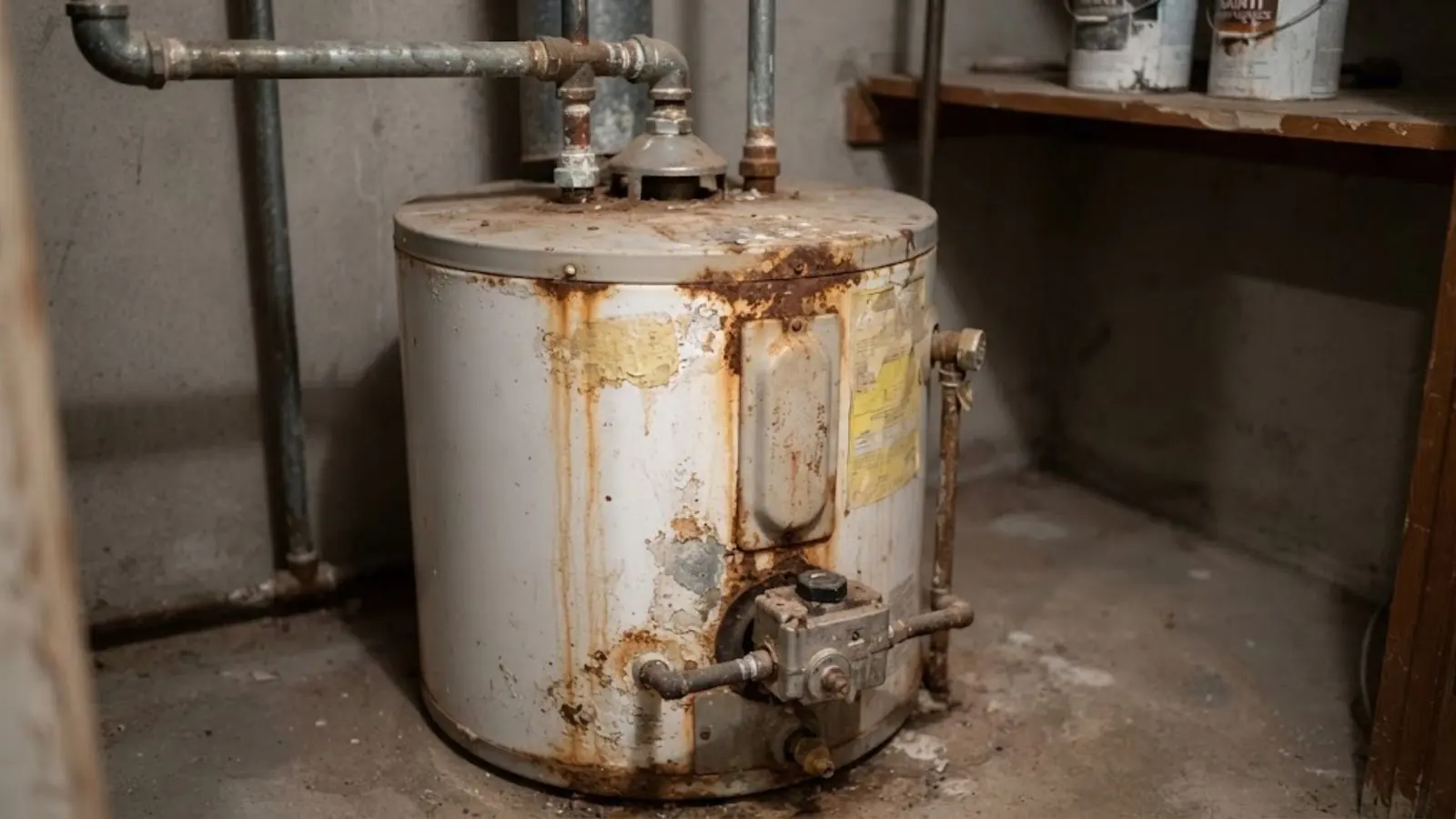
What the anode rod does
The anode rod is made of magnesium, aluminum, or zinc alloy and hangs inside the tank. Because it is more reactive than the steel tank, it corrodes first and draws the corrosion away from the tank wall. Plumbers call it a sacrificial part.
The rod wears down over time, faster in water with more minerals or in tanks that run hot. When it is gone, the steel tank takes over the corrosion, and a leak is not far behind.
Signs the rod may be spent
None of these prove it, but they are worth checking.
- Rusty or discolored hot water, especially after the heater sat unused.
- A rotten egg smell from the hot water only, which can come from a reaction between the rod and bacteria.
- Popping or rumbling noises from the tank that suggest scale or sediment.
- A heater that is several years old and has never had the rod checked.
- A rod removed for inspection that is thin, pitted, or coated with calcium.
How to check the rod
The rod usually screws into the top of the tank under a hex head, sometimes beneath a cap or insulation. To inspect it, turn off power or gas, close the cold supply, relieve pressure by opening a hot tap, and loosen the hex head with a socket. Many are tight, so an impact wrench or a long breaker bar helps.
Pull the rod straight up and look at it. If more than a few inches of the core wire show, or the rod is coated in hard scale, replace it. A rod that still looks thick can stay.
Rod types compared
The right type depends on your water.
| Type | Strength | Watch for |
|---|---|---|
| Magnesium | Protects well and is common in new heaters | Wears faster in some water |
| Aluminum | Lasts longer in some water | Aluminum residue concerns for some households |
| Aluminum and zinc | Helps reduce rotten egg odor | Not right for every tank |
| Powered anode | Does not wear out the same way | Needs power and costs more |
The clearance problem
A rod is as long as the tank is tall, and you need room above the tank to lift it out. In a low garage closet or under a ceiling, there may not be enough space. A flexible segmented rod solves this by bending as it comes out.
Measure the space above the tank before you buy. If the rod will not clear, ask about a flexible rod or call a plumber.
Replacing the rod step by step
After pulling the old rod, wrap the threads of the new one with plumber's tape, thread it in by hand, and tighten it with the socket. Open a hot tap and the cold supply to refill the tank, and let air escape until water runs steady.
Check the fitting for leaks, then restore power or gas. If the old rod was badly corroded, consider flushing the tank to clear sediment. A flush often improves performance in an older heater.
Who should do the work
If you hire a plumber, check the license first. The Arizona Registrar of Contractors lists contractor license classifications, and you can look up any contractor on its website before you sign. That check is free and takes a few minutes, and you should make it for every company you consider.
Ask whether the quote covers a flexible rod if clearance is tight, and whether the plumber will show you the old rod. A short explanation is a good sign.
Is it worth it on an older heater?
If your heater is near the end of its expected life, a new rod may not be worth the cost. A tank that already leaks cannot be saved. If you are unsure, our water heater repair page explains how a plumber checks an aging tank.
If the tank is rusting or the leak is real, plan a replacement. The water heater replacement page covers sizing, removal, and installation.
Flushing the tank while you are in there
Sediment settles at the bottom of a tank and insulates the water from the burner or element. A flush clears it and improves efficiency. Attach a hose to the drain valve, run it to a safe spot, and let the tank drain until the water runs clear.
Doing it with the rod service is smart, because the tank is already shut off and cool. If the drain valve is plastic and sticks, do not force it. A broken valve means a plumber call.
Tools for the job
Gather these before you start.
- A socket that fits the rod's hex head, often 1-1/16 inches, and a long breaker bar or impact wrench.
- A garden hose for draining the tank.
- Plumber's tape for the threads of the new rod.
- A flashlight and a bucket.
- Gloves, since parts and water can be hot.
Warranty and records
Read the heater's warranty before you open anything. Some require a licensed professional to do the work, and some require specific parts. Keep the receipt for the rod and a photo of the old one.
Write the date of the service on the tank or in your home records. A simple log of when you checked the rod and flushed the tank helps you see how your water treats the heater over time.
What the manufacturer says
Tank manufacturers publish instructions for anode rod service, and many state a recommended check interval. Following the manual keeps the warranty valid and the tank within its published safety standard, listed under ANSI Z21.10.1 for gas or UL 174 for electric.
Check the manual for the thread size and the rod type the maker approves.
Anode rod questions from Sahuarita homeowners
How often should I check the anode rod?
Many plumbers suggest every few years. Check your manual and your water conditions.
Will a new rod stop a tank that is already leaking?
No. A leaking tank needs replacement.
Why does my hot water smell like eggs?
It can be a reaction between the rod and bacteria in the tank. A different rod or a flush may help.
Can I replace the rod myself?
Yes, if you have the tools and the clearance. Many people hire a plumber because the rod is stuck.
Does replacing the rod affect my warranty?
Check the warranty terms before you start. Some require specific parts.
Do you service heaters in Green Valley?
Yes. See the Green Valley page.