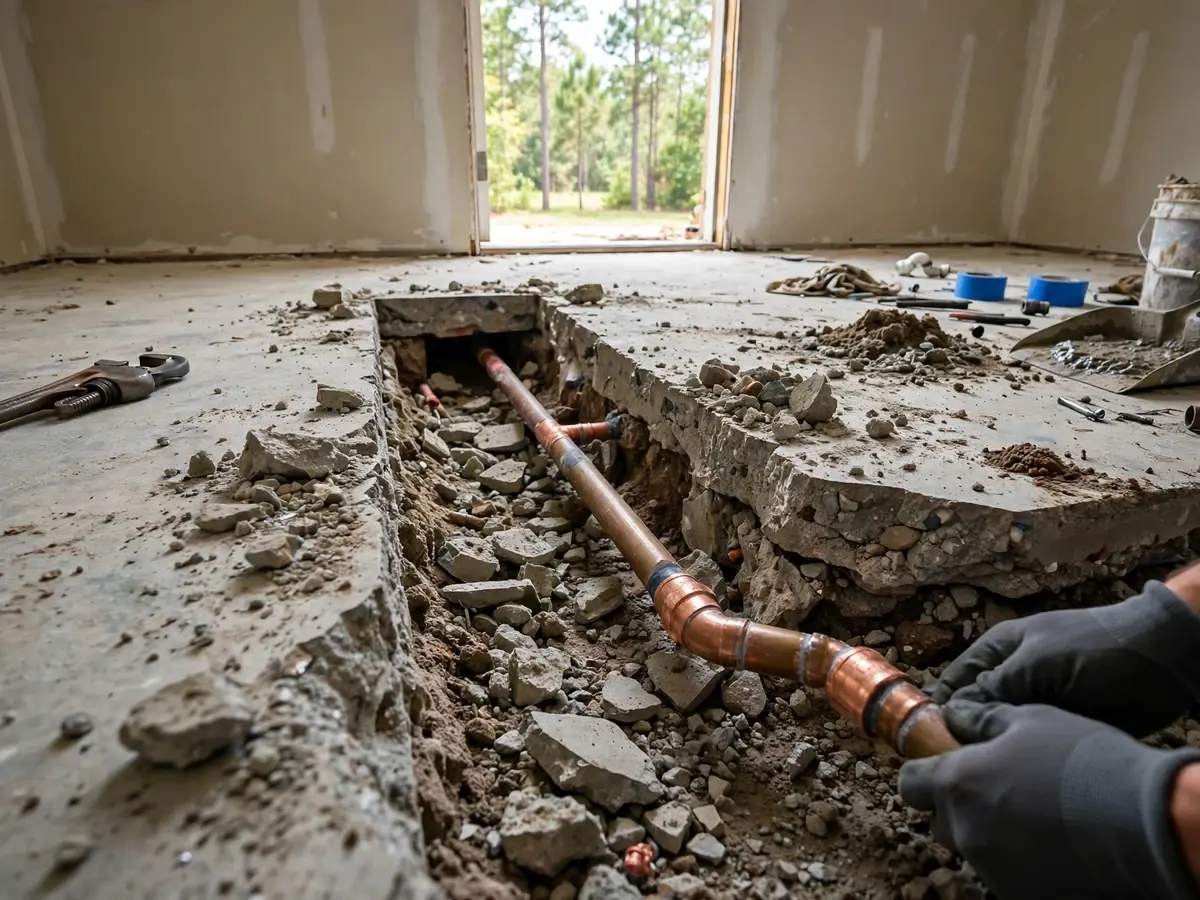
How to tell it is a slab leak
The classic signs are a warm spot on the floor, the sound of running water when everything is off, a meter that spins, a sudden jump in the water bill, or damp carpet and baseboards. Hot water lines carry heat, so a hot-side leak warms the concrete above it.
If you see water bubbling through the floor or the meter spins fast, close the main valve and call. Leaving it open can undermine the slab and soak flooring.
Slab leak emergency signs that need a call now
Any two of these together deserve a call.
- A warm area on tile or concrete that is not near a heat source.
- The sound of water running or hissing when all fixtures are off.
- A meter that moves with everything shut off.
- Water bills that rise without a reason.
- Wet carpet, lifting laminate, cracked tile, or a musty smell along one wall.
Pinpointing the break before we cut
We start with acoustic listening and thermal imaging, then isolate hot and cold lines with pressure tests to learn which line is leaking. Marking the break on the floor lets us cut a small hole instead of a large one.
Find out more about how the diagnosis works on the leak detection page. A good diagnosis often lowers the repair cost, since less concrete comes out.
Slab leak repair options
Each option fits different homes and budgets.
| Option | How it works | Best when |
|---|---|---|
| Spot repair through the slab | Break a small section and repair the pipe | One leak on an otherwise healthy line |
| Reroute through attic or walls | Abandon the slab line and run a new one overhead | Repeated leaks or hard-to-reach slab lines |
| Epoxy or lining | Coat the inside of the pipe | Pipes still sound, with narrow access |
| Whole-house repipe | Replace the supply lines | Widespread corrosion or repeated failures |
Why slab leaks happen in southern Arizona
Copper lines under slabs can develop pinholes from corrosion, from abrasion against the concrete or gravel, or from water chemistry. Water pressure that is too high speeds the damage. Homes with expansion and contraction in the slab can also stress lines at joints.
Caliche, a hard calcium carbonate layer in many southern Arizona soils, is another factor. It can hold moisture against pipe and complicate excavation, which is one reason rerouting is often the best option for homes with repeated leaks.
What happens to the floor and the insurance claim
Any repair involves flooring. Tile, carpet, and laminate over the leak may need to be lifted, and matching existing tile later can be difficult. We explain the floor impact in the quote so there are no surprises.
Document everything. Photograph wet areas, the meter reading, and the marked spot. Some insurers cover the cost to access a leak or the resulting water damage, though not the failed pipe, so ask your insurer before work begins.
What affects the price of slab leak repair
You get a clear price before work starts.
- Leak locationUnder a main room costs differently from under a garage.
- Repair pathSpot repair, reroute, and repipe differ widely.
- FlooringTile, hardwood, and carpet affect restoration.
- AccessFurniture removal and tight spaces add time.
- Time of callAfter-hours dispatch may differ from a daytime visit.
Ask your insurer about water damage and access coverage. Call (855) 575-2890 for your real number.
Permits and standards for slab work
Rerouting or replacing lines falls under the plumbing code your local building department enforces, and cutting a slab often triggers a permit. Ask the building safety department before work starts, since permit rules vary by location.
PEX tubing is made to ASTM F876, and the marking printed on any pipe tells you which standard it meets. Check the marking on pipe before it goes in the ground or the attic.
Slab leak questions from Sahuarita homeowners
Do you handle slab leak emergencies at night or on weekends in Sahuarita?
Yes. Dispatch is 24/7. Close the main valve and call, and we send a plumber the same day when the schedule allows.
Can a slab leak damage my foundation?
Prolonged leaks can undermine soil beneath the slab. That is why we recommend acting quickly once a leak is suspected.
How do you find the leak without tearing up the floor?
We use listening gear and thermal imaging, then pressure testing to isolate the line. See leak detection.
Is rerouting better than breaking the slab?
It depends on the home. Rerouting avoids concrete work but needs access through walls or the attic.
Will my homeowners insurance cover it?
Policies vary. Many cover water damage and sometimes access costs, but not the pipe itself.
Do you serve Green Valley?
Yes. See the Green Valley page.