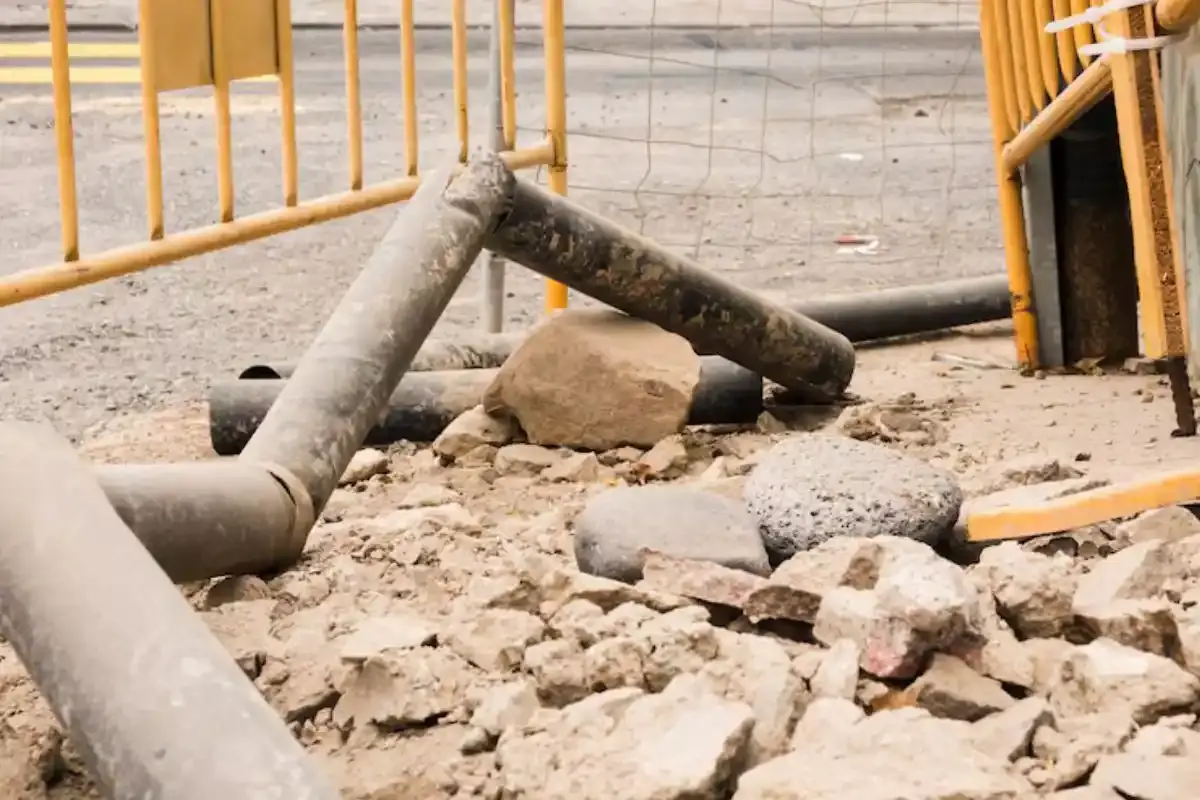
Signs of a broken line under the slab
Several of these together are a strong signal.
- Slow drains or backups in the lowest fixtures first, such as a floor drain or tub.
- Gurgling in drains and toilets when water runs elsewhere.
- Sewage smell indoors or in the yard near the foundation.
- A damp patch, cracked tile, or a soft spot on the floor above the line.
- Mold, pests, or a sunken area in the yard along the line's path.
Why lines break under slabs
Older cast iron lines corrode from the inside out and crack. Clay and some plastic lines can shift as the soil moves, and tree roots seek out joints and enter through tiny gaps. A bellied section, which sags and holds water, causes repeat clogs even without a break.
Slab homes add one complication. The line runs beneath concrete, so you cannot reach it without cutting through or going around.
Confirming the break with a camera
A plumber feeds a camera on a flexible cable through a cleanout and records the pipe. The camera shows cracks, offsets, root intrusion, and low spots. A locator on the surface marks the depth and position so repairs happen in the right place.
Ask for the video and the marked location. Our sewer inspection page explains what the report should include. That record helps with insurance and with comparing bids.
Repair options for an under-slab line
Each option fits different damage.
| Option | How it works | Best when |
|---|---|---|
| Spot repair through the slab | Cut the slab, replace the damaged section, patch the concrete | One short break in an otherwise good line |
| Trenchless lining | Insert a resin liner that cures into a new pipe | Cracks or roots in a line that is still in place |
| Reroute around the slab | Abandon the old line and run a new one outside the foundation | Long damage or a collapsed section |
| Pipe replacement through the slab | Cut a trench along the line and replace the pipe | Widespread damage and good access |
What to expect during a spot repair
The plumber marks the spot, cuts a small opening in the slab with a saw, digs down to the pipe, and replaces the damaged section. The slab is patched with concrete, and flooring is restored separately. Dust, noise, and moving furniture are part of the job.
Ask who handles flooring and finish work, and how long the area will be out of use. Our sewer line repair page explains how we plan these projects.
Call 811 before any digging
Arizona law requires you to call Arizona 811 at least two full working days before you dig. The service is free, and utilities mark their buried lines. It does not mark private lines, such as your own sewer lateral, so the plumber still needs to locate that line.
A repair that goes outside the slab, such as a reroute, needs this call. Your plumber normally handles it, but you should know it exists.
Insurance and permits
Some homeowner policies cover sewer line damage in limited cases, and others offer an add-on. Read your policy and ask your agent before work begins, since the decision may need to be made in advance.
Permit rules vary, so ask the Town of Sahuarita building safety department, or Pima County if your home is in Green Valley. A repair of this size often needs an inspection.
Do not wait
A broken line leaks sewage into the soil, and a collapsed line causes full backups. Both are worse the longer they wait. If your drains back up now, stop using water and call. Our Green Valley page covers that area, and our 24/7 line is open at any hour.
Waiting also lets damage spread. The earlier you find the break, the more options you have, including lining that avoids cutting the slab.
Lining a pipe without opening the slab
Trenchless lining inserts a resin-soaked liner into the old pipe, then cures it with steam or light so it hardens into a new pipe inside the old one. It works well on cracks, joints, and root intrusion. It does not work on collapsed pipe or pipe with severe offsets.
The cleanout access and the camera result decide whether lining is possible. Lining also reduces the pipe diameter slightly, which is usually acceptable, and a plumber can tell you whether it fits your line.
Questions to ask before the work begins
Get these answers in writing.
- Which repair method is proposed, and why that one over the others?
- How much concrete will be cut, and who patches it?
- How is flooring or tile handled after the repair?
- Is a permit and inspection part of the plan?
- What warranty covers the repair?
Standards for under-slab repairs
Trenchless lining follows ASTM F1216, and camera findings are commonly coded under the NASSCO PACP system. Ask the plumber to describe defects in those terms and to give you the video.
Repair work falls under the plumbing code and often needs a permit. Ask the building safety department what applies.
Under-slab sewer line questions in Sahuarita
Can a sewer line under a slab be fixed without breaking the concrete?
Sometimes. Lining or rerouting can avoid cutting the slab.
How do you know where the break is?
A camera and a surface locator mark the position and depth.
Does Arizona 811 mark my sewer line?
No. It marks utility lines, not private sewer laterals.
How long does an under-slab repair take?
It depends on the method and the damage. Your plumber gives a timeline after the camera inspection.
Will insurance pay for it?
Policies vary. Ask your agent before work begins.
Do you repair sewer lines in Green Valley?
Yes. See the Green Valley page.